1. Introduction: Does the Pot Really Affect Plant Growth?
Most people blame the plant.
Yellowing leaves? Must be the light.
Stunted growth? Probably the fertilizer.
Root rot? Overwatering, obviously.
But there’s an overlooked variable sitting quietly beneath it all: the pot itself.
The material your plant grows in doesn’t just hold soil — it shapes the entire root environment. It controls how fast moisture evaporates, how much air reaches the roots, and how stable the soil temperature remains throughout the day.
So, do plants grow better in plastic or ceramic pots?
For most species, ceramic tends to promote healthier, more balanced root development — thanks to its breathability and insulation. But plastic absolutely has its place, especially for moisture-loving plants or budget-friendly setups.
This guide will break down:
- How pot material directly impacts plant growth
- The pros and cons of ceramic vs plastic
- Which plants thrive in each
- A side-by-side comparison
- Practical tips to maximize growth regardless of material
Because thriving plants aren’t just about what you water — they’re about what you plant into.
What Actually Influences Plant Growth in a Pot?
Before choosing sides, it helps to understand what truly drives plant growth inside a container.
It starts below the surface.
Root Health Is Everything
Leaves get the glory, but roots run the operation. Healthy roots absorb water, nutrients, and oxygen. If roots are stressed — compacted, overheated, or suffocating — growth slows, even if everything above soil looks fine.
And this is where pot material becomes critical.
Breathability, Drainage & Moisture Balance
Roots need oxygen just as much as they need water. When soil stays overly wet without airflow, oxygen levels drop — and root rot becomes a real threat.
- Breathable materials allow some air exchange.
- Proper drainage lets excess water escape.
- Balanced moisture retention prevents both drought stress and sogginess.
The pot influences all three.
Temperature Regulation
Roots are sensitive to temperature swings. Soil that overheats in direct sun or chills rapidly at night can stress plants and stunt growth.
Insulating materials help stabilize soil temperatures, creating a more predictable root environment — especially outdoors or near drafty windows.
Why Pot Material Changes Soil Conditions
Plastic and ceramic don’t behave the same way.
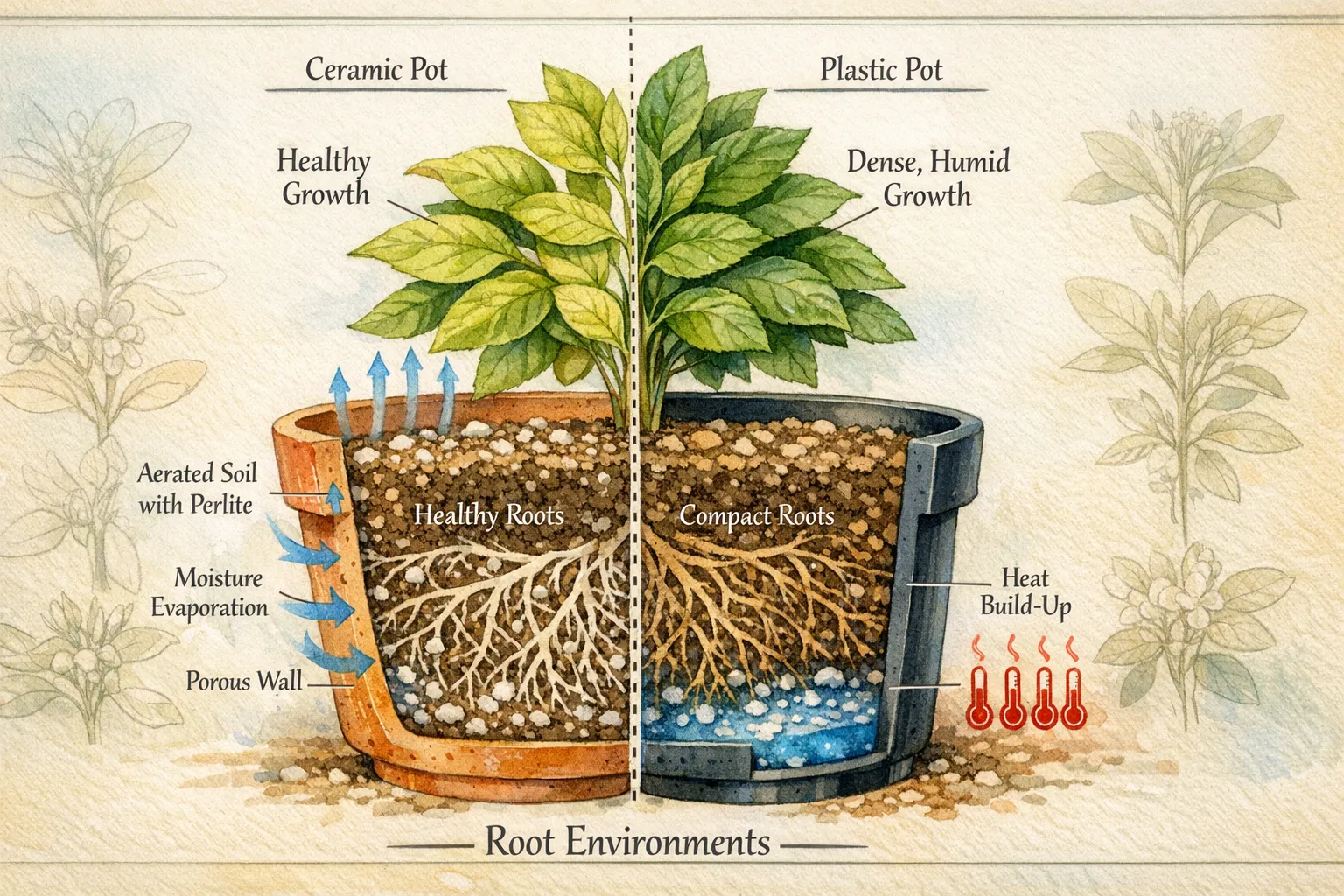
Plastic traps heat and holds moisture.
Ceramic allows gradual evaporation and offers better insulation.
That means the same watering routine in two different pots can produce two completely different root conditions.
And roots determine growth.
Ceramic Pots: Why They Often Support Better Growth
Breathability, Stability & Long-Term Root Health
Ceramic pots — particularly unglazed or partially porous ones — tend to create a healthier balance between moisture and airflow.
Here’s why.
High Breathability
Ceramic materials allow some air movement through their structure. This improves oxygen availability around the root zone, reducing suffocation and encouraging stronger root systems.
Gradual Moisture Evaporation
Unlike plastic, ceramic allows water to evaporate more naturally. Soil dries at a steady pace rather than staying wet for extended periods, which lowers the chance of chronic overwatering.
Lower Risk of Root Rot
Because moisture doesn’t remain trapped as long, ceramic pots reduce the likelihood of soggy soil — one of the leading causes of root rot.
Better Insulation Against Temperature Extremes
Ceramic walls are thicker and denser than plastic. They buffer roots from sudden temperature spikes or drops, making them ideal for:
- Outdoor patios
- Balconies
- Rooms with fluctuating temperatures
Ideal for Variable Conditions
If your environment isn’t perfectly controlled, ceramic provides a margin of stability that plastic often lacks.
Long Lifespan
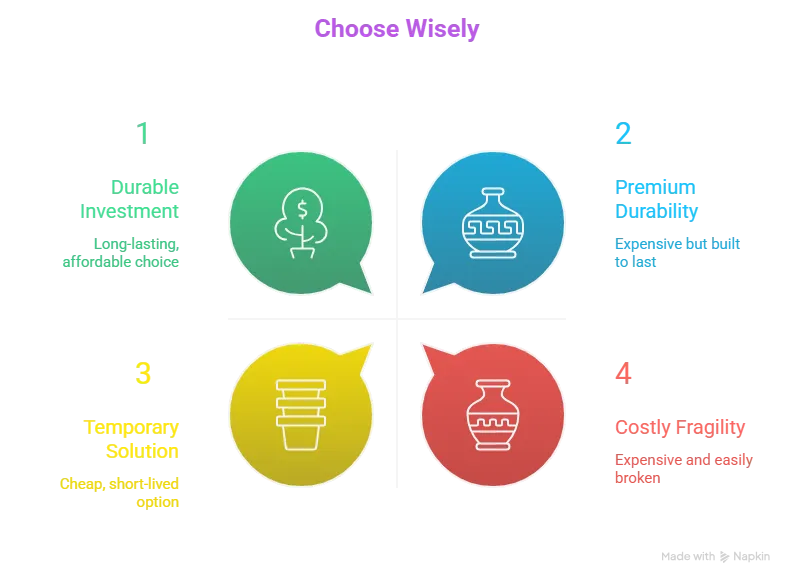
High-quality ceramic pots can last for years without degrading. They don’t warp under sun exposure and don’t become brittle with age the way some plastics can.
Eco-Friendly Advantage
Ceramic is made from natural materials and is biodegradable over time, making it a more environmentally conscious choice compared to petroleum-based plastic.
Aesthetic Appeal
And yes — appearance matters. Ceramic pots offer a premium, timeless look that complements interiors and outdoor spaces alike.
But their real strength isn’t visual.
It’s what happens underground: stronger roots, steadier moisture balance, and fewer growth setbacks caused by environmental stress.
Up next, we’ll examine where plastic pots shine — and why they’re not as inferior as some assume.
Plastic Pots: When They Make Sense
Moisture Retention & Practical Convenience
Plastic pots often get dismissed in the ceramic-versus-plastic debate — but that’s too simplistic.
They don’t “kill” plants. They simply create a different environment. And for certain plants — and certain lifestyles — that environment works.
Even Moisture Retention
Plastic is non-porous. Water doesn’t escape through the sides, which means soil stays moist for longer periods. For plants that dislike drying out quickly, this can be beneficial.
Instead of fluctuating from wet to dry rapidly, moisture levels remain more consistent — provided watering is controlled.
Suitable for Tropical & Humidity-Loving Species
Plants that naturally grow in humid, rainforest-like conditions often appreciate sustained soil moisture. Ferns, calatheas, pothos, and peace lilies tend to tolerate — even prefer — this slower drying cycle.
In dry indoor environments, plastic can help counteract rapid evaporation.
Lightweight & Easy to Move
If you rearrange your space often, rotate plants for light, or move pots seasonally, plastic’s portability is a practical advantage. Large ceramic containers can become cumbersome quickly.
Budget-Friendly & Accessible
Plastic pots are inexpensive and widely available in countless sizes and colors. For beginners, propagation projects, or large plant collections, they provide a cost-effective solution.
Shatterproof & Safe
In homes with pets, children, or high foot traffic, plastic eliminates the risk of broken shards. It’s durable in a way ceramic simply isn’t.
Ideal for Indoor Setups
Indoors, where UV exposure is minimal, plastic degradation isn’t an immediate concern. In controlled environments with stable temperatures, plastic can function reliably — especially when paired with good drainage and proper watering habits.
Plastic isn’t inferior. It’s situational.
Key Drawbacks of Each Material
The Trade-Offs You Should Know
No pot material is perfect. Each comes with trade-offs that influence plant health, maintenance, and longevity.
Ceramic Drawbacks
Heavier & Harder to Move
Ceramic’s density provides stability — but also weight. Large ceramic pots can be difficult to reposition or transport.
Higher Upfront Cost
Quality ceramic containers cost more than plastic. For large collections, this adds up quickly.
Fragile if Dropped
Ceramic can chip, crack, or shatter upon impact. One slip during repotting can end a pot’s lifespan.
Plastic Drawbacks
Low Breathability
Plastic traps moisture. Without careful watering and proper drainage, soil can remain wet too long — increasing the risk of root rot.
Heat Retention Outdoors
Plastic heats up quickly under direct sunlight. Elevated soil temperatures can stress roots, especially in hot climates.
UV Degradation Over Time
Outdoor exposure to sunlight weakens plastic, causing brittleness and fading over time.
Environmental Impact
Most plastic pots are petroleum-based and non-biodegradable. Over time, they contribute to environmental waste — a factor many plant owners increasingly consider.
Choosing between ceramic and plastic isn’t about perfection. It’s about understanding what you’re willing to manage.
Best Plants for Ceramic vs Plastic Pots
Match the Pot to the Plant
The smartest approach? Start with the plant — not the pot.
Best for Ceramic
(Breathable, Stable Moisture Control)
Ceramic suits plants that benefit from gradual drying and better airflow:
- Succulents
- Cacti
- Herbs
- Perennials
- Most houseplants (like fiddle leaf figs)
- Plants prone to overwatering issues
Because ceramic allows moisture to evaporate more naturally, it reduces the likelihood of soggy soil — especially important for drought-tolerant species.
Best for Plastic
(Higher Moisture Retention)
Plastic favors plants that prefer consistent humidity and don’t tolerate drying out quickly:
- Ferns
- Calatheas
- Pothos
- Peace lilies
- Plants that prefer evenly moist soil
For these species, plastic’s moisture-retaining nature can provide a stable hydration cycle — especially in dry indoor environments.
Growth improves when the root environment mirrors the plant’s natural habitat. And the pot you choose plays a bigger role in that than most people realize. 🌿
Side-by-Side Comparison Table
Quick Decision Guide
When you strip away aesthetics and preferences, the difference comes down to how each material shapes the root environment.
Here’s a direct comparison:
| Aspect | Ceramic Pots | Plastic Pots |
| Breathability | High (helps prevent rot) | Low (can risk soggy soil) |
| Temperature | Insulates well | Heats up quickly |
| Weight | Heavy, stable | Lightweight, portable |
| Durability | Long-lasting, but breakable | Shatterproof, may degrade under UV |
| Cost | Higher upfront | More affordable |
| Eco-Friendliness | Natural, biodegradable | Petroleum-based, non-biodegradable |
If your priority is root health and environmental stability, ceramic has an edge.
If your priority is mobility, budget, or moisture retention, plastic becomes practical.
The right choice depends less on trend — and more on context.
Usage Tips for Both Pot Types
Maximizing Growth Regardless of Material
No pot can compensate for poor care. Material matters — but technique matters more.
Here’s how to optimize plant growth no matter what you choose:
Always Choose Pots with Drainage Holes
Drainage is non-negotiable. Excess water must have an exit. Without it, even the most breathable ceramic pot can become a root rot risk.
Use Well-Aerating Soil Mixes
Soil structure is just as important as pot material. Incorporate components that promote airflow and prevent compaction.
Elevate Pots for Airflow
Using pot feet or stands allows air circulation beneath the container and prevents trapped moisture at the base.
For Plastic Outdoors: Choose UV-Resistant Types
If placing plastic pots outside, select UV-stabilized options to reduce brittleness and degradation over time.
Test Soil Moisture Regularly
Plastic retains moisture longer than many realize. Check the soil before watering — especially in non-breathable containers.
Adjust Watering Based on Pot Type
Ceramic may dry out faster; plastic may stay moist longer. Your watering schedule should adapt accordingly.
Growth improves when care aligns with container properties.
Final Verdict: Do Plants Grow Better in Plastic or Ceramic?
Here’s the honest answer:
For most plants, ceramic pots support stronger, more resilient root systems because of their breathability and temperature stability.
But plastic isn’t inferior — it’s specific.
Plastic works well for moisture-loving plants, dry indoor environments, or situations where budget and portability matter most.
The real determinant of growth isn’t ceramic versus plastic.
It’s whether the root environment matches the plant’s natural needs.
A drought-tolerant succulent in a moisture-retentive plastic pot will struggle.
A humidity-loving fern in fast-drying ceramic might dry out too quickly.
“Better” isn’t about material superiority.
It’s about alignment.
Match the pot to the plant. Adjust watering to the container. Consider your climate.
Because thriving plants aren’t built on trends — they’re built on root health. 🌿