Introduction: The Pot That Looks Good — But Is It Good for Your Plant?
There’s a quiet standoff happening on windowsills everywhere.
On one side: the plant — living, breathing, sensitive to moisture, airflow, and root conditions.
On the other: the pot — glossy, sculptural, impossibly chic.
And somewhere in between stands you, wondering: Are glazed ceramic pots actually good for plants… or just good for Instagram?
The short answer? Yes — but it depends.
Glazed ceramic pots can be excellent for certain plants and risky for others. Their sleek, sealed surface helps soil retain moisture longer, which is a gift for tropical, humidity-loving plants. But that same feature can quietly create soggy conditions that suffocate roots if drainage and soil structure aren’t handled properly.
So this isn’t a simple yes-or-no debate. It’s a matter of pairing the right pot with the right plant — and understanding how moisture, aeration, and drainage work together beneath the surface.
In this guide, we’ll break down:
- The real advantages of glazed ceramic pots
- The potential drawbacks you shouldn’t ignore
- Which plants thrive in them — and which struggle
- A side-by-side comparison with unglazed terracotta
- Practical tips to use glazed pots without risking root rot
Because the goal isn’t just a beautiful corner of your home. It’s a thriving one.
What Makes a Glazed Ceramic Pot Different?
At first glance, the difference seems cosmetic. One pot is smooth and glossy. The other — terracotta — is matte, earthy, almost rustic.
But the real distinction isn’t about looks. It’s about porosity.
Glazed ceramic pots are coated in a non-porous layer that seals the clay beneath. That glossy finish isn’t just decorative — it prevents water from evaporating through the walls of the pot. Moisture stays in the soil longer because it can’t escape sideways.
Unglazed terracotta, by contrast, is porous. Water moves through its walls and evaporates into the air. The soil dries out faster. Air circulates more freely around the root zone.
This single difference — porous versus sealed — changes everything.
In a glazed pot:
- Soil retains moisture longer
- Watering frequency decreases
- Humidity around roots remains more stable
In terracotta:
- Soil dries more quickly
- Airflow increases
- The risk of prolonged sogginess decreases
Why does this matter? Because roots need oxygen just as much as they need water. When soil stays wet for too long without adequate drainage or aeration, roots can suffocate. That’s when problems like root rot begin.
So glazed ceramic pots aren’t inherently good or bad. They simply create a different micro-environment for your plant’s roots — one that favors moisture stability over rapid drying.
And whether that’s beneficial or harmful depends entirely on what you’re growing.
The Pros of Glazed Ceramic Pots
Why Many Plant Owners Prefer Them
Glazed ceramic pots have earned their place on shelves and sunlit corners for a reason. Beyond the polished finish lies a set of functional benefits that, when matched with the right plant, can make care noticeably easier.
1. Moisture Retention (Less Frequent Watering)
Because glazed ceramic is non-porous, water doesn’t evaporate through the pot’s walls. The soil stays moist for longer, meaning you won’t need to water as frequently as you would with unglazed terracotta. For moisture-loving plants, this stable hydration can mimic their natural environment.
2. Ideal for Forgetful Owners — or Heavy Waterers
If you occasionally forget a watering day, glazed pots offer a buffer. The retained moisture helps prevent soil from drying out too quickly.
On the flip side, for those who tend to water generously, the slower evaporation can help balance moisture levels — provided drainage is adequate. In both cases, the pot creates a more forgiving watering window.
3. Even Soil Moisture Distribution
Because water isn’t escaping from the sides, moisture tends to remain more evenly distributed throughout the soil. This consistency reduces extreme dry pockets and helps roots absorb water more uniformly — especially beneficial for tropical plants that prefer steady conditions.
4. Better Temperature Insulation Than Plastic
Ceramic is thicker and denser than plastic, offering better insulation against sudden temperature changes. Soil temperatures remain more stable during heat spikes or cooler nights, which reduces stress on roots. For indoor plants near windows or drafty areas, this added stability can matter more than you think.
5. Aesthetic Appeal & Durability
Let’s not ignore the obvious: glazed ceramic pots look refined. Their finishes are vibrant, often resistant to fading, and less prone to surface cracking compared to raw clay. They maintain their color and polish over time, making them both decorative and long-lasting.
6. Safety of Modern Glazes
Modern glazed ceramics are generally safe for plants. Quality pots — particularly those glazed on the exterior only — are designed not to leach harmful substances like lead into the soil. When sourced responsibly, they pose minimal risk to plant health.
In short, glazed ceramic pots provide moisture stability, visual appeal, and structural resilience — a combination that explains their popularity among indoor plant enthusiasts.

The Cons of Glazed Ceramic Pots
Where Things Can Go Wrong
For all their advantages, glazed ceramic pots demand awareness. Their very strengths can become weaknesses if not managed properly.
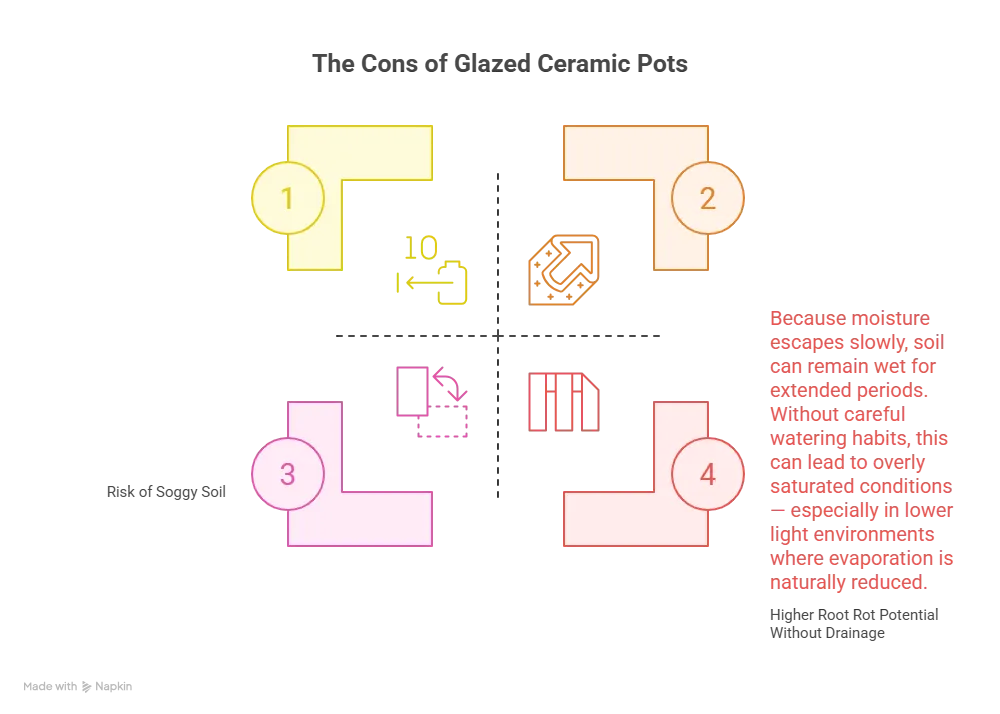
1. Risk of Soggy Soil
Because moisture escapes slowly, soil can remain wet for extended periods. Without careful watering habits, this can lead to overly saturated conditions — especially in lower light environments where evaporation is naturally reduced.
2. Higher Root Rot Potential Without Drainage
Drainage holes are non-negotiable. In a glazed pot without proper drainage, excess water has nowhere to go. It pools at the bottom, depriving roots of oxygen and creating the perfect conditions for root rot. The non-porous walls won’t help wick away that excess moisture.
3. Reduced Airflow Compared to Terracotta
Unlike porous terracotta, glazed ceramic doesn’t allow air exchange through its sides. This limits passive aeration around the root zone. For plants that prefer high airflow and rapid drying, this can be a disadvantage.
4. Heavier Weight
Glazed ceramic pots are noticeably heavier than plastic or even some terracotta options. While this makes them stable — especially for tall plants — it also makes rearranging, cleaning, or repotting more cumbersome.
5. Breakability
Ceramic is durable but not forgiving. If dropped, it can chip or shatter. In high-traffic areas or homes with pets and children, this fragility is worth considering.
6. The Danger of Pots Without Drainage Holes
Some decorative glazed pots are sold without drainage holes. These should never be used directly for planting unless you’re keeping the plant in its nursery container inside the pot. Without drainage, excess water accumulation becomes a serious risk.
Glazed ceramic pots are not problematic by default — but they require intention. Without drainage, proper soil structure, and mindful watering, their moisture-retaining nature can quickly turn from benefit to liability.
Best Plants for Glazed Ceramic Pots
Plants That Thrive in Consistent Moisture
Glazed ceramic pots create a slower-drying, more humidity-stable environment. For certain plants, that’s not a compromise — it’s comfort.
Moisture-loving species evolved in tropical or subtropical climates where the soil doesn’t swing dramatically from soaked to bone-dry. They prefer consistency. And that’s precisely what glazed pots help maintain.
Because water evaporates more slowly, the root zone remains evenly hydrated for longer periods. For plants that dislike dramatic dry spells, this stability reduces stress and supports steady growth.
Plants that typically thrive in glazed ceramic pots include:
- Pothos – Adaptable and forgiving, but happiest in evenly moist soil.
- Philodendrons – Tropical by nature, they prefer consistent hydration without extreme drying.
- Peace lilies – Dramatic when thirsty, appreciative of steady moisture.
- Ferns – Sensitive to drying out, they benefit from retained humidity.
- Fiddle leaf figs – Prefer controlled, stable watering patterns.
- Monstera – Enjoys moisture consistency, especially during active growth.
These plants don’t want swamp conditions — they want balance. The slower drying time of glazed ceramic helps create that middle ground: not parched, not drenched.
For tropical foliage plants in particular, the combination of moisture retention and stable soil temperature makes glazed ceramic a smart pairing.
Plants to Avoid in Glazed Pots
Plants That Prefer Fast Drainage & High Aeration
If tropical plants appreciate moisture stability, arid plants demand the opposite.
Species that originate from dry, desert-like environments are adapted to rapid drainage and high airflow around their roots. In their natural habitat, rain comes fast — and disappears just as quickly.
When placed in moisture-retentive containers, these plants often sit in soil that stays wet longer than they can tolerate. And that’s when problems begin.
Plants that typically struggle in glazed ceramic pots include:
- Succulents – Store water in their leaves; excess soil moisture leads to rot.
- Cacti – Require fast-draining conditions and prolonged dryness between waterings.
- Snake plants – Extremely tolerant of drought but sensitive to overwatering.
- Orchids – Need high airflow and specialized, airy growing mediums.
- Lavender – Prefers dry, well-drained soil and dislikes prolonged moisture.
These plants thrive in porous materials like unglazed terracotta, which allow moisture to escape quickly and air to circulate more freely.
In a glazed ceramic pot, their roots may remain damp for too long — increasing the risk of root rot and fungal issues.
In short: if the plant is built for drought, it likely won’t appreciate a moisture-retentive home.
Glazed vs. Unglazed: Side-by-Side Comparison
Quick Decision Guide
Sometimes, clarity lives in contrast.
Here’s a simplified breakdown to help you decide:
| Feature | Glazed Ceramic Pots | Unglazed Terracotta Pots |
| Moisture Retention | High (less frequent watering) | Low (dries quickly) |
| Airflow / Aeration | Moderate | High |
| Root Rot Risk | Higher without drainage | Lower |
| Weight | Heavy, stable | Lighter |
| Best For | Tropicals, overwaterers | Succulents, under-waterers |
If your plant prefers steady hydration and you’re careful about drainage, glazed ceramic can work beautifully.
If your plant thrives on drying out quickly, terracotta often offers a safer margin.
How to Use Glazed Ceramic Pots the Right Way
Preventing Root Rot & Maximizing Benefits
Glazed ceramic pots aren’t risky — misuse is.
Here’s how to make them work in your favor:
1. Always Choose Pots with Drainage Holes
This is non-negotiable. Drainage allows excess water to escape instead of pooling at the bottom.
2. Use a Well-Draining Soil Mix
Even moisture-loving plants benefit from structure. A quality mix prevents compaction and supports root oxygenation.
3. Add Perlite for Aeration
Incorporating perlite improves airflow within the soil and reduces the chance of prolonged sogginess.
4. Water Only When the Topsoil Dries
Because glazed pots retain moisture longer, resist the urge to water on a fixed schedule. Check the top inch of soil first.
5. Elevate Pots for Airflow Underneath
Using pot feet or stands improves air circulation below the container and prevents water from sitting against surfaces.
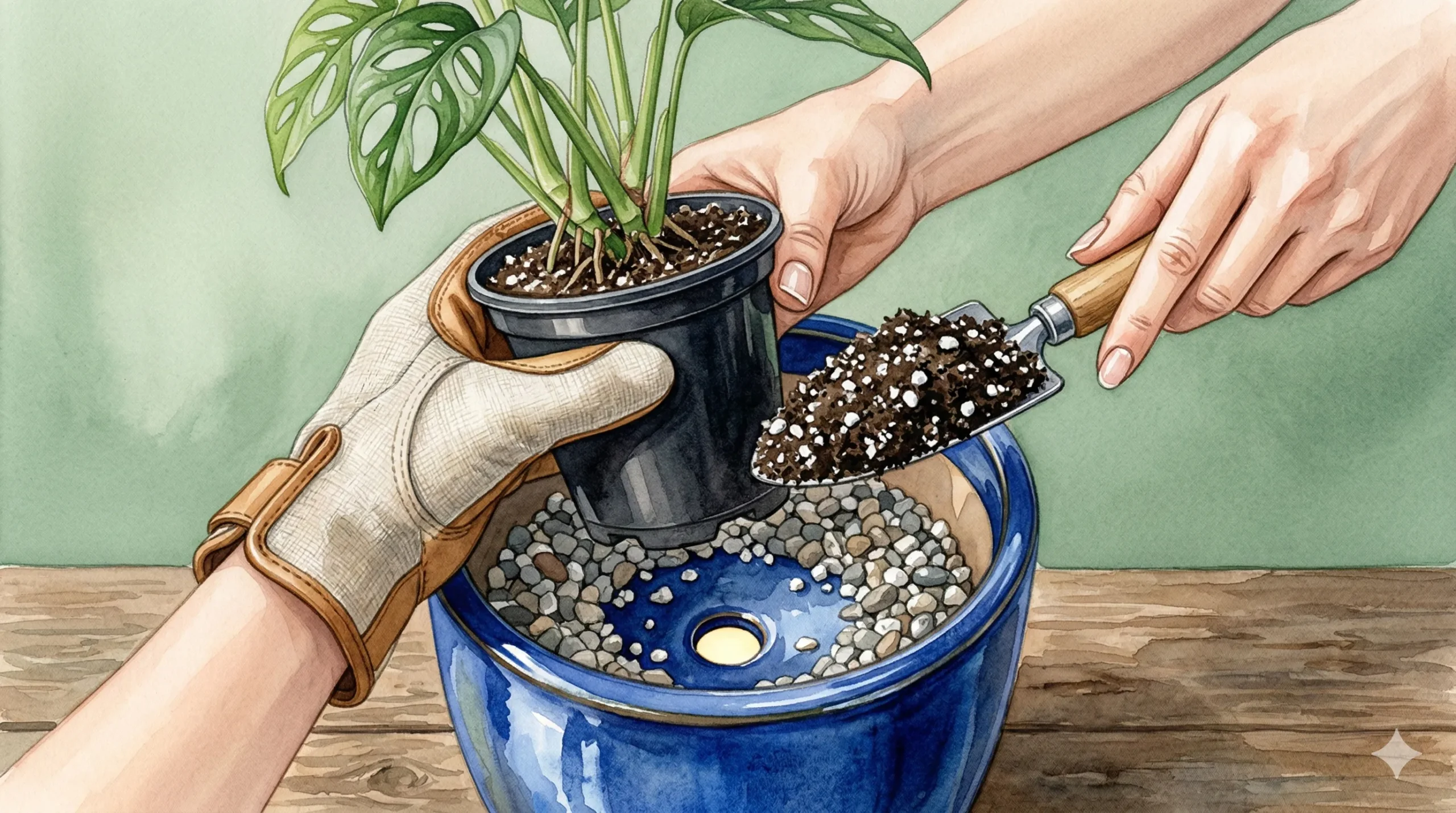
6. For Pots Without Drainage Holes
Do not plant directly into them. Instead, keep the plant in its nursery container and place it inside the decorative pot over a layer of pebbles. This allows water to drain away from the roots.
Handled intentionally, glazed ceramic pots can support healthy root systems and thriving foliage. The key is understanding the environment they create — and adjusting your care routine accordingly.
Final Verdict: Are Glazed Ceramic Pots Good for Plants?
So — are glazed ceramic pots good for plants?
Yes. But only when they’re matched intentionally.
Glazed ceramic pots aren’t inherently better or worse than terracotta. They simply create a different root environment — one that favors moisture retention, stability, and slower drying soil. For the right plant and the right watering habits, that environment can be ideal. For the wrong pairing, it can quietly lead to problems.
Who Should Choose Glazed Ceramic Pots
Glazed ceramic pots are a strong choice if:
- You grow tropical or moisture-loving plants
- You prefer less frequent watering
- Your indoor environment is dry and causes soil to evaporate quickly
- You want temperature stability for roots
- You value durability and long-lasting aesthetics
They’re particularly useful for plant owners who understand their watering routine and want a pot that helps maintain consistent soil moisture without daily monitoring.
Who Should Avoid Them
Glazed ceramic pots may not be the best option if:
- You grow succulents, cacti, or drought-tolerant plants
- You tend to overwater without checking soil moisture
- You prefer fast-drying soil between waterings
- You don’t have access to pots with drainage holes
If your plant thrives on airflow, rapid drying, and minimal moisture retention, a porous option like unglazed terracotta will often offer a safer margin for error.
The Real Takeaway
The question isn’t simply, “Are glazed ceramic pots good?”
It’s: Are they good for your specific plant — and your specific watering style?
Plant health is less about trends and more about alignment. Match the container’s properties to the plant’s natural habitat and your care habits, and glazed ceramic can be both beautiful and beneficial.Because in the end, the best pot isn’t the one that looks good on a shelf.
It’s the one that keeps roots breathing beneath the surface. 🌿